A new, system-wide strategy sets a shared direction for how high performance coaching will be supported, recognised and valued to 2032 and beyond, bringing organisations together to coordinate action, reduce duplication and amplify impact for coaches across the UK.
UK Sport has today announced the launch of the 2032 High Performance System Coaching Strategy, a shared commitment from partners across the performance landscape to strengthen coaching as a driver of sustainable success and wellbeing in Olympic and Paralympic sport.
Developed collaboratively through the high performance system including the Home Nation Sport Councils (Sport England, sportscotland, Sport Wales and Sport Northern Ireland), UK Coaching, CIMSPA, UK Sport and the UK Sports Institute, the strategy is designed to align priorities and accelerate progress. Partners will now work together to operationalise the strategy through coordinated programmes, shared learning and clearer routes for coaches to access support, development and recognition.
The purpose of the strategy is to provide a clear, coherent and joined-up mission for performance coaching: ensuring coaches are supported, valued and able to pursue and excel in their craft in the right environments. Its objectives include improving the day-to-day experience of coaching in high performance settings; strengthening the coaching workforce and its diversity; promoting healthy, sustainable ways of working; and creating consistent pathways for development and professional recognition across the UK.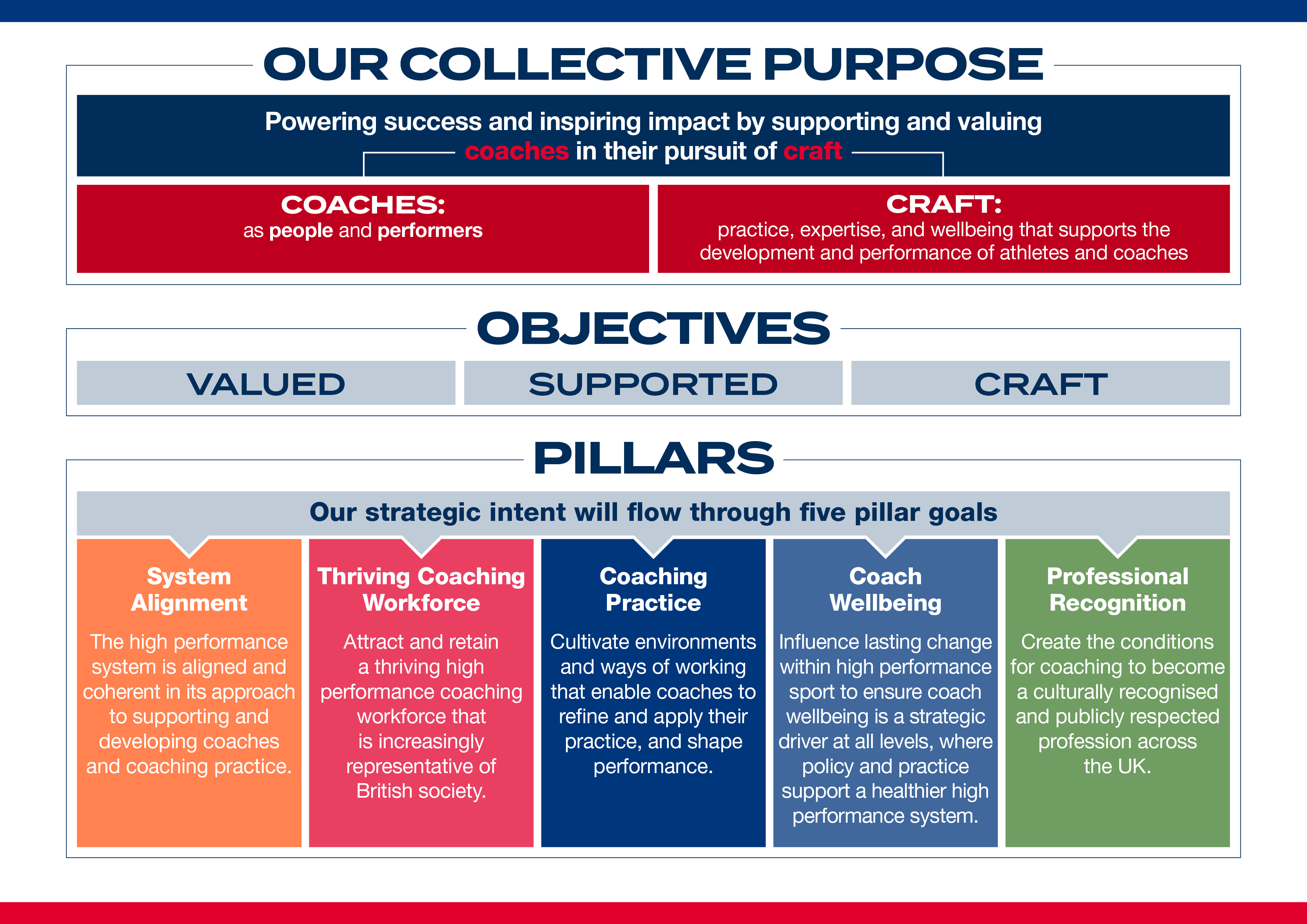
Download 2032 High Performance System Coaching Strategy
The strategy is built around five strategic pillars, setting out what “good” looks like and where partners will focus effort:
- Strategic alignment – a shared direction, language and ways of working across the system so coaches experience coherent support, not fragmented offers.
- Thriving coaching workforce – attract, retain and develop a high performance coaching community that is skilled, resilient and increasingly representative of British society.
- Coaching practice – cultivate environments that enable coaches to refine and apply their practice, learn continuously and shape performance.
- Coach wellbeing – influence lasting change so wellbeing is a strategic driver, supported by healthier policies, cultures and day-to-day practice.
- Professional recognition – create clearer routes to professional standards and recognition, increasing the status and visibility of high performance coaching.
Danny Kerry, Coaching Lead at UK Sport said: “Supporting Performance Coaches needed policy and practice intervention, alongside sports and stakeholders understanding their responsibilities. The 2032 High Performance System Coaching Strategy does this by aligning activity to be coherent across the strategic pillars, identify gaps and opportunities. Over the next 4 to 8 years and beyond coaches will feel supported in their work practice, feel a whole lot more valued and recognised in what they do.”
Over the coming months, partner organisations will translate the pillars into practical, measurable actions, aligning existing offers, identifying gaps and working collectively on new initiatives that better meet coaches’ needs. By taking a more joined-up approach, the high performance system aims to create stronger foundations for sustained success through to Brisbane 2032 and beyond, supporting coaches, strengthening the coaching community and powering performance across the UK.